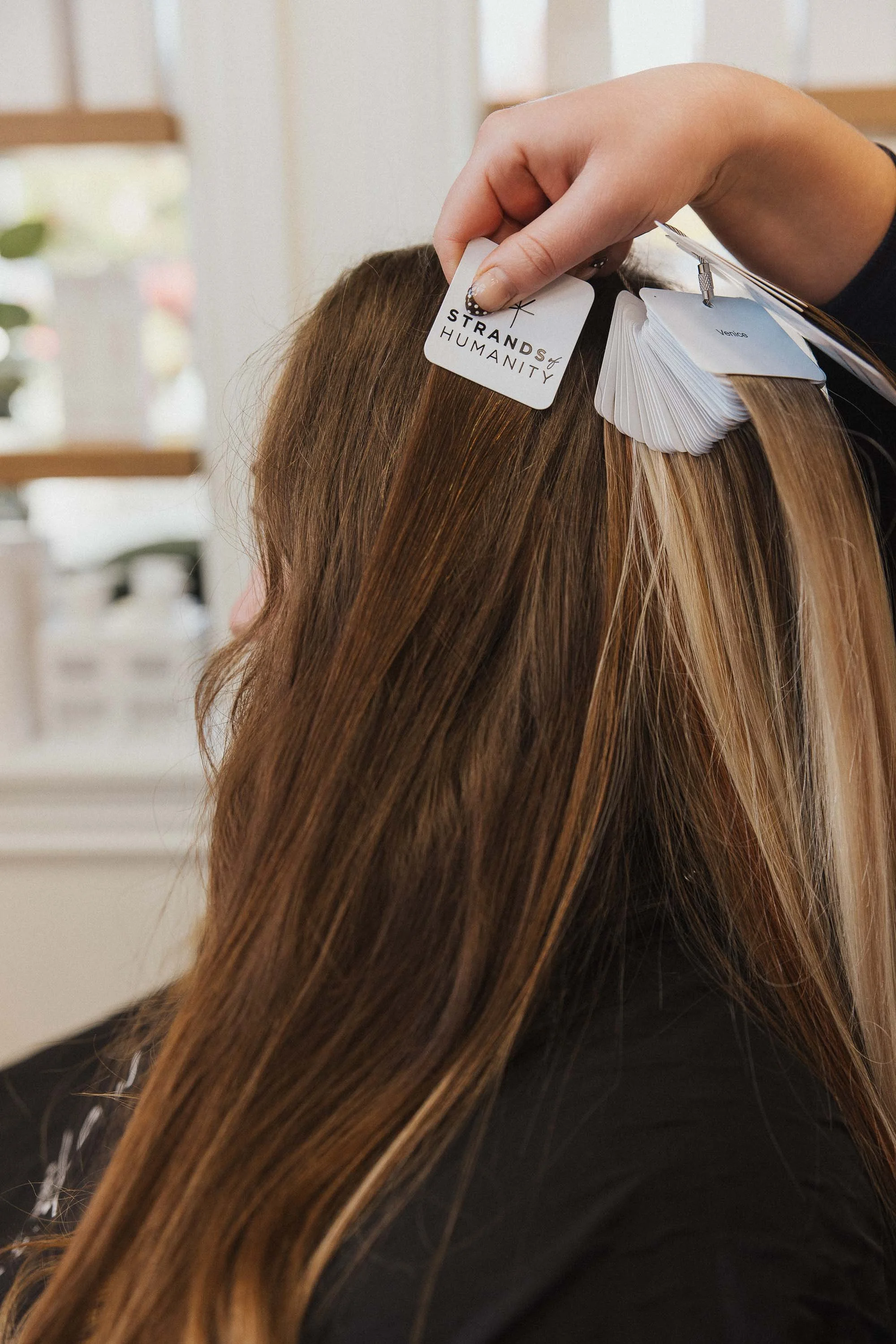
Longer hair. Fuller hair. More volume. More possibilities.
Hair extensions can create a beautiful transformation, but if you've started researching your options, you've probably noticed something.
There are a LOT of different extension methods.
Tape-ins. I-tips. K-tips. Hand-tied extensions.
And while they may all help you achieve added length or fullness, the application methods, maintenance requirements, and suitability for different hair types can vary considerably.
Let's break them down.
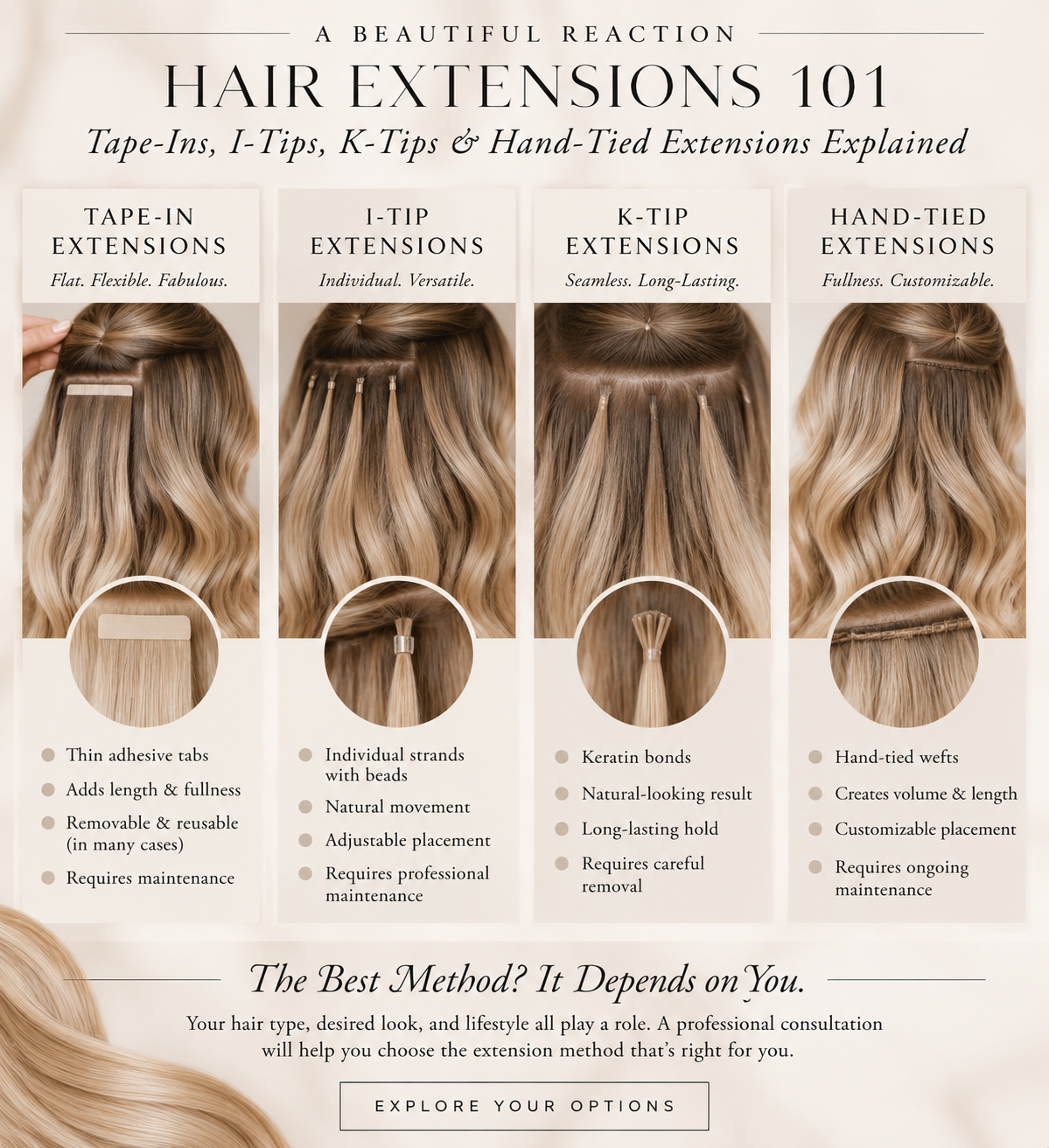
Tape-In Extensions: The Flat, Flexible Option
Tape-in extensions consist of sections of extension hair attached using thin adhesive tabs.
A stylist typically places these around small sections of your natural hair, creating a relatively flat attachment.
One reason people love tape-ins is that they can provide noticeable fullness and length without requiring individual bonds throughout the entire head.
They're also removable and reusable in many cases, depending on the extension hair and its condition.
Things to consider: Tape-ins require professional maintenance as your hair grows. Oils and certain products near the adhesive can affect attachment, so proper home care matters.
I-Tip Extensions: Individual Strands, No Adhesive Bond
I-tip extensions are attached strand by strand using small beads or rings.
Rather than using heat to fuse an adhesive bond, the stylist secures individual extension strands mechanically.
This method allows for customized placement and movement.
I-tips may appeal to clients who want individual extensions without keratin fusion bonds.
Things to consider: The beads need professional adjustment or removal as your natural hair grows. Placement, strand weight, and tension are particularly important.
K-Tip Extensions: Individual Keratin Bonds
K-tip extensions, sometimes called keratin-tip or fusion extensions, use individual strands with keratin-based attachment tips.
A trained stylist uses a specialized heating tool to soften the bond and attach the extension to a small section of natural hair.
K-tips allow for detailed placement and can create a natural-looking result when appropriately installed.
Things to consider: They require a careful application and professional removal process. Unlike many tape-in or beaded systems, bonded extensions are generally removed and replaced rather than simply moved up.
Hand-Tied Extensions: Fullness With Wefts
Here's an important distinction: hand-tied usually refers to how a hair extension weft is constructed, rather than one universal installation method.
A hand-tied weft is a thin strip of extension hair assembled by hand.
These wefts are commonly sewn onto a foundation created with beads, thread, or another stylist-selected technique.
Hand-tied wefts are popular for creating beautiful length and volume while allowing stylists to customize the number and placement of rows.
Things to consider: The foundation and weight must be appropriate for your natural hair. Maintenance appointments are necessary as the rows grow out.
Which Extension Method Is Best for Fine Hair?
There isn't one answer for everyone.
Fine hair can require especially thoughtful placement, weight distribution, and concealment of attachment points.
Your stylist should evaluate your density, scalp condition, hair strength, and desired results before recommending a method.
And it's important to remember that extensions should never feel painfully tight or place excessive tension on your natural hair.
How Long Do Hair Extensions Last?
That depends on the method, your hair growth, the quality of the extension hair, and how you care for it.
Some methods require periodic move-up appointments, while others involve removing and replacing the attachments.
The extension hair itself may remain usable longer than the installation, depending on its quality and condition.
Your stylist should provide a maintenance schedule specific to the method you choose.
The Most Important Part? The Consultation.
The best extension method isn't necessarily the one you've seen most often on Instagram.
It's the one that works for your natural hair, desired length, budget, maintenance preferences, and lifestyle.
A professional consultation helps determine whether extensions are appropriate for your hair and which application method makes the most sense.
Whether you're dreaming of waist-length waves or simply want your ponytail to feel a little fuller, the goal is a result that looks beautiful while respecting the health of your natural hair.